Your 'Slow Fashion' Brand Deal Income vs. Your State Textile Worker Wage: A Chart That Will Ruin Your Morning
Your 'Slow Fashion' Brand Deal Income vs. Your State Textile Worker Wage: A Chart That Will Ruin Your Morning
Let's begin with the numbers, because the numbers are doing a lot of work in this story.
At the height of your content career — let's call it Q3 of last year, when your "I Didn't Buy Anything New for 365 Days (Here's What I Wore)" video hit 2.3 million views — you were earning somewhere between $8,000 and $14,000 a month. Brand deals from ethical linen companies. Affiliate commissions from a vintage resale platform that was, technically, still a marketplace operating on profit motive, but the aesthetic was very rustic so it balanced out. A Patreon with 1,100 supporters who paid between $5 and $20 a month to receive your monthly mending diary and early access to your capsule collection lookbooks.
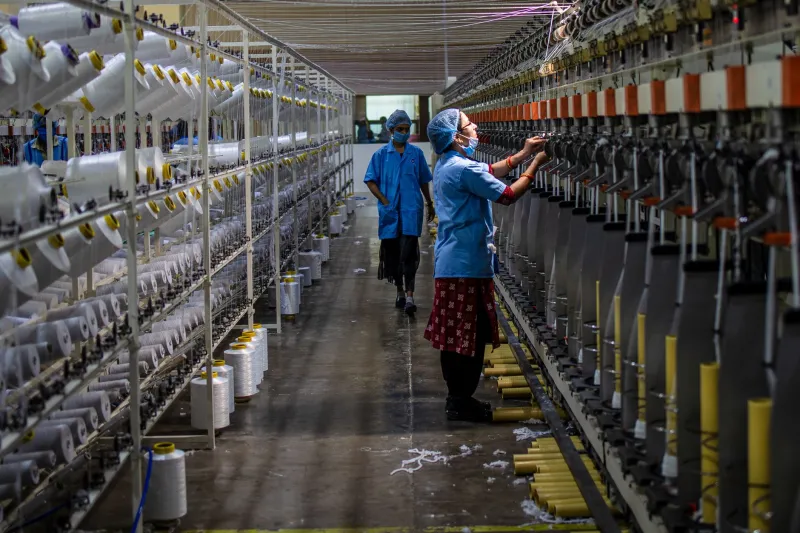
Your assigned wage as a Cotton Processing Unit Operative, Grade 2, at State Textile Facility 9 in Xinjiang Administrative Production Zone 4 is the equivalent of $340 a month.
We made a chart. It is below. We are sorry about the chart.
The Chart
| Income Source | Monthly Earnings (Pre-Revolution) | Monthly Earnings (Post-Revolution) |
|---|---|---|
| Brand deals (ethical linen, slow fashion brands) | $6,200 | $0 (brands nationalized) |
| Patreon subscribers | $1,800 | $0 (Patreon nationalized) |
| Depop affiliate commissions | $900 | $0 (resale markets abolished) |
| YouTube AdSense | $1,100 | $0 (YouTube nationalized) |
| Capsule wardrobe PDF guide ($27) | $600 | $0 (information is free now) |
| State textile worker wage | — | $340 |
| TOTAL | ~$10,600 | $340 |
The Bureau acknowledges this is a significant adjustment. The Bureau would like you to note that your housing is now provided by the state, which is true, and that it is a room in a dormitory building shared with eleven other textile operatives, which is also true, and that these two facts exist in a relationship with each other that the Bureau considers adequate.
How We Got Here: A Retrospective
You didn't set out to become an influencer. You set out to push back against a system that was destroying the planet one polyester blend at a time. That's legitimate. The fast fashion industry is, by most credible measures, an environmental catastrophe, and someone had to say so.
That someone turned out to be extremely photogenic, owned a very good ring light, and had a natural gift for filming themselves examining the stitching on a 1970s corduroy blazer in a way that felt simultaneously educational and aspirational. The audience came. The brand deals followed. The ethical linen company came first, then the natural dye kit subscription box, then — and this is the part the Bureau's investigators spent the most time on — the collaboration with a mid-size sustainable fashion label that manufactured its pieces in Portugal, which is better than Bangladesh, certainly, but is still manufacturing, for profit, which you described in your sponsored video as "a step in the right direction."
The Central Committee watched that video four times. They made notes.
What You Told Your Audience the Revolution Would Look Like
In your most-viewed video, "What Fashion Looks Like After Capitalism," you described a future in which clothing was produced locally, by skilled artisans, in community workshops, using natural fibers and traditional techniques. People would mend rather than replace. They would value quality over quantity. Textile knowledge would be passed down, honored, woven — and you used this word deliberately — into the fabric of daily life.
You said you wanted to see the textile arts reclaimed from corporate exploitation.
The state has reclaimed them. You are now part of the reclamation. You begin Monday on the cotton gin.
The Emotional Journey, Documented in Approximate Stages
Stage 1: Confusion. "But I was against industrial textile production. That was literally my whole thing."
The Bureau understands. The Bureau would like you to know that the cotton gin does not care about your thing.
Stage 2: Bargaining. "Could I at least work in a natural dye facility? Or a mending cooperative? There must be some role that aligns with my—"
The Bureau reviewed the state's current labor allocation needs. There is no mending cooperative position available at this time. There is an opening on the overnight shift at Cotton Processing Unit 9. There is also an opening at Cotton Processing Unit 9's adjacent synthetic fiber blending station, which the Bureau notes is arguably less aligned with your values, so Unit 9 is genuinely the better outcome here.
Stage 3: Attempted Reframing. You briefly tried to reconceptualize your new role as "participating directly in the material conditions of textile production" and wrote two paragraphs about it in your journal. They were good paragraphs. The Bureau's literary staff gave them a 7 out of 10. This did not change your assignment.
Stage 4: Acceptance. You are not there yet. Most reassigned slow fashion creators reach Stage 4 around the third week. The work is repetitive but not cognitively demanding, which gives you significant time to think, which in the early weeks is not a comfort but eventually becomes one.
A Note on Your Merchandise
Your "Mend Don't Spend" tote bags, your "Slow Down" embroidered crewnecks, and your limited-edition "Anti-Haul" enamel pins have been seized and redistributed. The tote bags are now in use at a regional food distribution center. The crewnecks were given to workers at a facility in the northern district. The enamel pins are in a box somewhere. The Bureau is not entirely sure where the enamel pins are.
Your Depop store has been nationalized. Your saved searches for "deadstock linen" and "90s minimalist" are now the property of the people, who have not found them useful.
In Fairness
Look. You weren't wrong about fast fashion. You were right about almost all of it. The industry is extractive, the labor conditions are frequently appalling, and the volume of clothing produced annually is genuinely difficult to justify on any ecological basis.
The issue — and this is the Bureau speaking now, so please hear it in the spirit of honest institutional feedback — is that you built a media business on top of your critique of media businesses, and somewhere around the third brand deal, the line between bearing witness to a problem and monetizing your proximity to a problem became difficult to locate.
The revolution, to its credit, has located it for you.
Cotton Processing Unit 9. Monday. 5:30am. The coat is not optional — the facility is air-conditioned to a degree that will surprise you.
You said you wanted to work with textiles. Welcome, Comrade. The gin is waiting.