Your 'Buy Nothing' Group Has Been Nationalized: Welcome to the Shift Where You Make the Things You Refused to Buy
The Revolution Has Audited Your Refusal to Participate in the Economy
Let's establish the timeline.
Sometime around 2020, you discovered the Buy Nothing movement and felt, for the first time in years, genuinely virtuous. You gave away a lamp. Someone gave you a bread maker. You wrote about it online. People responded warmly. You started a local chapter. The chapter grew. You began describing your lifestyle as 'post-consumer' in your Instagram bio, which sat just below 'anti-capitalist' and just above a link to your Substack, which cost $8 a month to access.
The People's Bureau of Conscious Consumption has reviewed this sequence of events. The Bureau has questions — specifically, about what you think happens to a society in which everyone stops buying things and nobody is assigned to make them instead.
Spoiler: the Bureau has an answer. You're not going to love it.
The Buy Nothing Philosophy, Stress-Tested by History
Here is what the Bureau finds genuinely admirable about the Buy Nothing movement: the underlying impulse — that industrial consumer culture produces enormous waste, that communities can share resources, that not every need requires a new purchase — is not wrong. It is, in fact, the kind of thinking that sounds very good in a neighborhood Facebook group and considerably less good when scaled to a national economic policy.
The Soviet Union, for instance, ran an economy in which consumer goods were famously difficult to obtain. Citizens did not buy much, largely because there was not much to buy. This was not experienced as liberation. It was experienced as standing in line for four hours for cooking oil and then being told the cooking oil had not arrived.
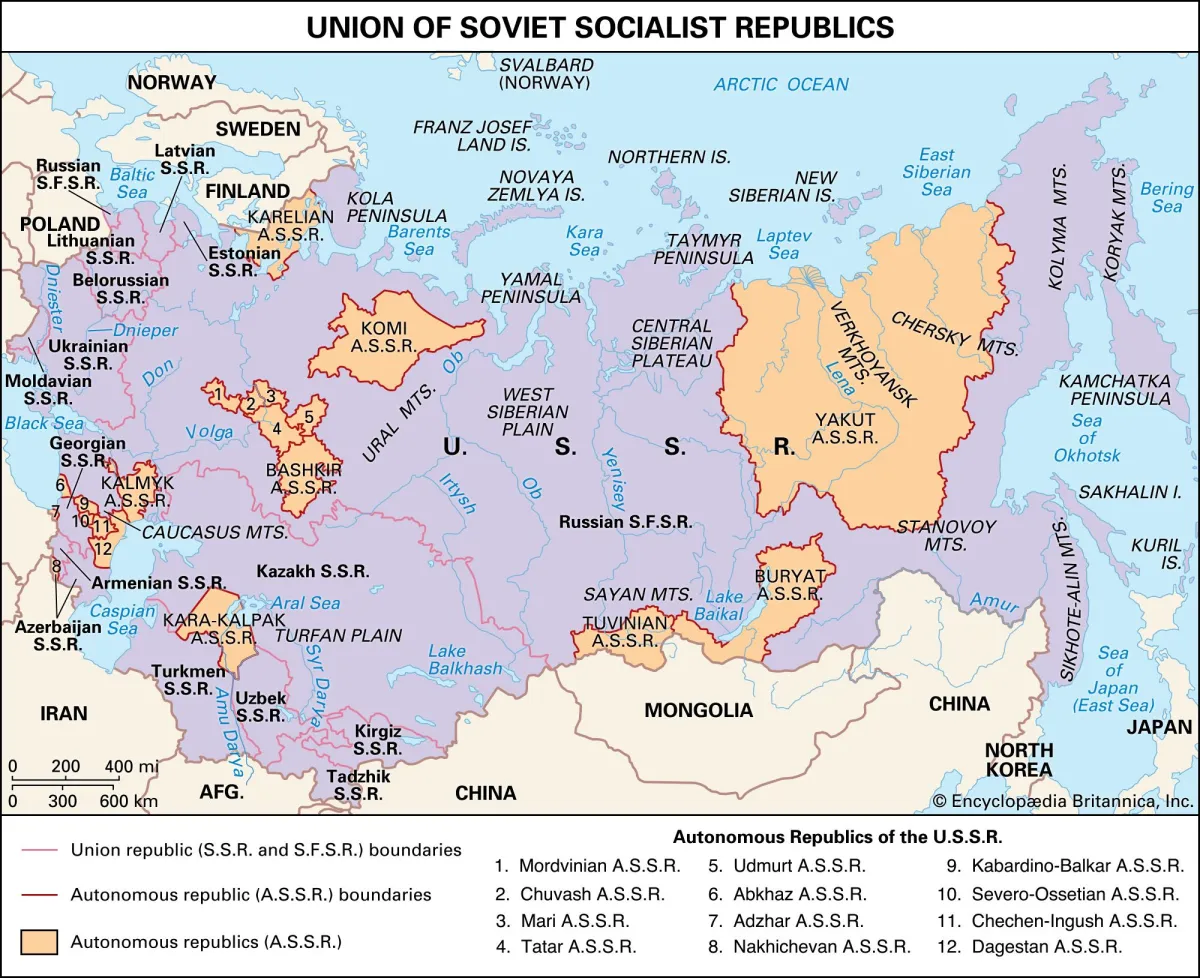 Photo: The Soviet Union, via cdn.britannica.com
The difference, of course, is that your Buy Nothing group had access to the goods it was nobly refusing to purchase. The thrill of 'ISO: a pasta strainer, any condition' only works when someone nearby owns three pasta strainers and has a capitalist economy to thank for that abundance.
The Bureau notes this not to be difficult, but because it is relevant to your new assignment.
Your Skills Assessment Results
The Bureau's career evaluation team reviewed your group's membership roster — 847 people, remarkable — and conducted individual assessments. The results were instructive.
The collective skills inventory of your Buy Nothing chapter includes: graphic design (five members), life coaching (eleven members), 'content creation, various platforms' (sixty-three members), herbalism (four members), and one member who listed their occupation as 'recovering corporate lawyer turned slow-living advocate,' which the Bureau's team discussed at some length before assigning her to the ceramics production facility in Block D.
The Bureau also noted, with some interest, that your chapter's most-posted item category over the past eighteen months was 'home goods,' followed by 'children's clothing,' followed by 'exercise equipment, barely used.' These are, the Bureau observes, manufactured goods — goods that exist because someone, somewhere, ran a production quota and met it.
That someone was not you. The Bureau would like that to change.
Introducing: The Production Quota
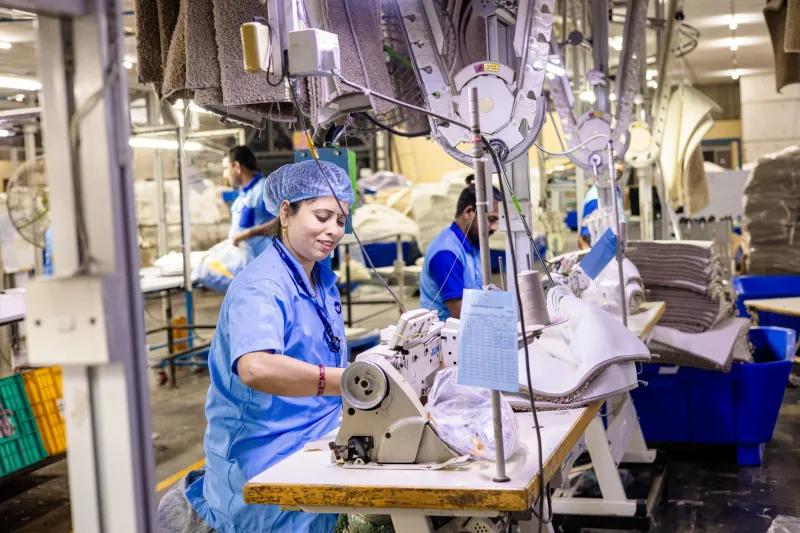
Effective immediately, your Buy Nothing chapter has been reconstituted as Production Unit 7, Consumer Goods Division.
The unit will operate two shifts: 6am to 6pm, and 6pm to 6am. You will rotate. The Bureau does not take requests regarding shift preference, though it notes that your Medium essay specifically cited 'the violence of the 9-to-5 schedule' as evidence of capitalist harm, and wishes to reassure you that your new schedule does not replicate that particular harm.
Production Unit 7 will manufacture the following:
- Household textiles (dish towels, bath towels, assorted)
- Basic ceramic goods (plates, mugs, bowls — not artisanal, not intentional, just plates)
- Fasteners and basic hardware
- One category of item TBD based on quarterly collective need assessments
You will not be choosing which items to produce based on their alignment with your values. The Bureau chooses. The Bureau has already chosen. It chose fasteners.
A Note on Your Vintage Thrifted Workwear
Several members of your chapter have inquired about the dress code for Production Unit 7. The Bureau appreciates the question.
We have reviewed the outfits documented across your chapter's social media presence. The aesthetic leans heavily toward: oversized vintage flannels, thrifted Carhartt jackets worn ironically, wide-leg secondhand corduroys, and at least three members photographed in what appear to be reclaimed workwear pieces purchased from Etsy shops for between $65 and $140.
The Bureau wishes to inform you that none of these garments meet the safety regulations required for operation near industrial textile equipment. Loose-fit vintage flannels, specifically, present what the safety documentation describes as a 'significant entanglement risk' near rotating machinery.
You will be issued a standard-issue uniform. It is not vintage. It was not thrifted. It was manufactured, at scale, by a production unit not unlike the one you are joining. The Bureau hopes you will find this poetic in some small way.¹
On the Concept of 'Enough'
One of your chapter's guiding principles, as stated in your pinned Facebook post, is that 'we already have enough.' The Bureau finds this a beautiful sentiment.
It would like you to make more things anyway.
The quarterly fastener quota for Production Unit 7 is 340,000 units. This is not negotiable. This is, the Bureau acknowledges, quite a lot of fasteners. But someone has to make the fasteners. The economy does not run on the radical act of not acquiring fasteners. It runs on fasteners.
You understand this now. The Bureau is glad you understand this now.
Your first shift begins Monday. Please leave the vintage Carhartt at home.
¹ It has not found it poetic. The Bureau checked.