The Bureau Has Read Your 'Rest Is Revolutionary' Newsletter Archive. Your Shovel Is in Locker 7.
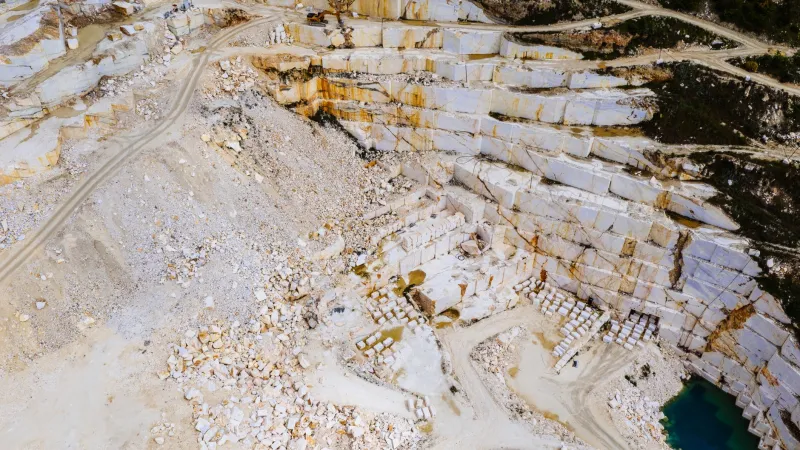
A Personal Essay by Comrade M., Former Burnout Prevention Consultant, Currently Assigned to Lithium Extraction Unit 3, Elevation 4,200 meters
I want to be upfront about something: I believed everything I wrote. That's not a defense. It's context.
For three years, I ran a newsletter called Unclench, which at its peak had 31,000 subscribers, a paid tier at $12 per month, a course called The Architecture of Rest ($347, evergreen funnel, converted at about 2.1%), and a coaching practice where I charged $210 an hour to help people — mostly mid-level marketing professionals and one surprisingly stressed yoga instructor — identify the ways their relationship to productivity was harming them.
The irony of charging $210 an hour to discuss the harms of capitalism is not lost on me. It was not lost on me then, either. I addressed it in Issue 23, "On the Contradictions of Profiting From Anti-Hustle Messaging in a Hustle Economy," which remains my most-shared piece and which I am now deeply unable to read without a specific kind of internal weather that I don't have good language for yet.
What I Taught
The central argument of Unclench was simple: the cultural pressure to be perpetually productive is not a neutral feature of modern life. It is a mechanism. It keeps workers too exhausted to organize, too busy to imagine alternatives, too invested in their own output to question the system that demands it.
Rest, in this framing, is not laziness. It is refusal. It is the small, daily practice of insisting that your value as a person is not denominated in your economic output.
I wrote this approximately once a week, from a home office I had arranged carefully to look both productive and relaxed, which is harder than it sounds and requires specific lighting. I had a candle. I had a plant. I had a mug that said something about mornings that I am now too embarrassed to reproduce.
I genuinely believed it. The research on chronic overwork is real. The data on burnout is real. The connection between hustle culture and deteriorating mental health outcomes is documented and serious. I was not making things up.
I was, however, perhaps not fully accounting for what happens when you take the argument to its logical conclusion and someone with actual institutional authority reads your newsletter.
The Notice
The formal reassignment notice from the People's Bureau of Wellness and Labor Optimization arrived six weeks after the Transition. It was three pages. The first page summarized my platform. The summary was accurate, which was somehow worse than if it had been wrong.
The second page contained what the Bureau called an "ideological consistency review." This section noted that my platform had correctly identified the problem — that workers under capitalism are denied adequate rest and recovery — and that the Bureau agreed with this diagnosis entirely. The New Order, the notice explained, was committed to ensuring that no worker would ever again be forced to perform unnecessary cognitive labor for the profit of a private individual.
The third page explained that in light of this commitment, my previous role — performing cognitive labor for the profit of myself — had been dissolved, and that my documented skills in "endurance, self-regulation, and sustained output under conditions of personal discomfort" (they were quoting my own newsletter here, specifically a piece about the discipline required to maintain a content schedule) made me well-suited for physical extraction work.
I was assigned to Lithium Unit 3. The letter closed with the sentence: "The Bureau looks forward to your contribution to the collective rest that your previous work so eloquently described."
I have re-read that sentence many times. I think it was written by someone who enjoyed writing it.
The Architecture of Extraction
I named my course The Architecture of Rest because I believed that rest, like a building, requires structural support — intentional design, load-bearing habits, an understanding of what you're trying to protect.
The lithium mine also has an architecture. It is less metaphorical. It involves blast zones, drainage channels, haul road gradients, and a ventilation system that I have become more familiar with than I ever expected to be with any ventilation system.
The work is not, technically, beyond my physical capacity. This surprised me. I had spent considerable time writing about the importance of listening to your body's signals, and my body's signals during the first two weeks were extremely loud and almost entirely negative. But the human body adapts. Mine has. I am stronger than I was. I sleep without difficulty, which is something I used to charge people $210 an hour to help them achieve.
The sleep, I will admit, is excellent. The Bureau would probably find this funny.
What I Think About Now
I think about the people who subscribed to Unclench. Specifically, I think about the ones who were genuinely struggling — the ones who wrote me emails about crying in their cars before work, about lying awake cataloging their failures, about the specific dread of Sunday evenings. Those people were real, and what they were experiencing was real, and I hope some of what I wrote was useful to them.
I also think about the structural contradiction I danced around for three years without ever quite landing on it: that "rest as resistance" only works as a political act if you have a system to resist. Under the current arrangement, rest is not resistance. Rest is the scheduled recovery period between shifts, allocated by the Bureau based on physiological necessity and production targets. It is not revolutionary. It is a line item.
I wrote once that "doing nothing is doing something." The Bureau's response to this, operationally, has been to ensure I am always doing something, which I think is their version of a rebuttal.
A Note on the Mug
I mentioned the mug. It said "protect your peace." I don't have it anymore — personal items in excess of the approved quantity were redistributed during the housing consolidation. Wherever it is, I hope whoever has it is getting something out of it.
I protect my peace now by not thinking too hard about the gap between what I was selling and what I was modeling. That gap is real and I sit with it. Not because sitting with discomfort is healing, which is something I definitely wrote at some point, but because there's not much else to do about it at 4,200 meters.
The altitude does take some getting used to. The Bureau was right about that.
Comrade M. is currently assigned to Lithium Extraction Unit 3. Her newsletter archive remains accessible to the public as an educational resource. The paid tier has been dissolved. The course funnel has been nationalized. The plant processes approximately 12,000 tonnes of lithium carbonate annually, which the Bureau notes is significantly more output than the newsletter ever generated.