Digg, Reddit, and the Greatest Implosion in Internet History
There's a particular kind of tragedy reserved for things that were once great and then, through a combination of corporate arrogance and spectacularly bad timing, became cautionary tales. Blockbuster. MySpace. That one friend who peaked in high school and won't stop talking about it. And then there's Digg — the social news aggregator that ruled the early internet, picked a fight it couldn't win, and cratered in a manner so dramatic it still gets referenced in tech circles like a ghost story around a campfire.
But here's the twist: unlike most cautionary tales, this one doesn't entirely end in a ditch. Our friends at Digg have clawed their way back more times than a horror movie villain, and the story of how they got there is worth telling in full.
The Golden Age: When Digg Was the Internet
Cast your mind back to 2004. Facebook didn't exist yet. Twitter was still two years away from being a twinkle in Jack Dorsey's eye. YouTube was barely a concept. And if you wanted to find the best, most interesting, most viral content on the web, you went to Digg.
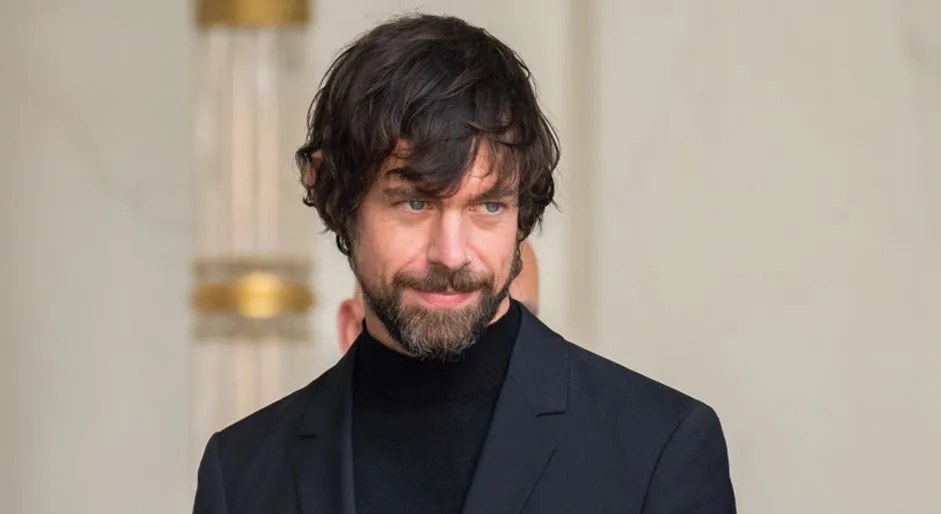 Photo: Jack Dorsey, via cdn.benzinga.com
Founded by Kevin Rose, Owen Byrne, Ron Gorodetzky, and Jay Adelson, Digg launched in November 2004 with a deceptively simple premise: let users submit links, let other users vote them up or down, and let the cream rise to the top. It was democratic, it was chaotic, and for a few glorious years, it was the front page of the internet — a title it wore before Reddit ever thought to claim it.
At its peak around 2008, Digg was pulling in roughly 40 million unique visitors a month. Kevin Rose was on the cover of BusinessWeek with a headline declaring he'd built a $60 million website in 18 months. The site had genuine cultural cachet. Getting "Dugg" — having your link hit the front page — could crash servers. Tech companies courted Digg's power users. It felt, genuinely, like the future of media.
And then, as is tradition in Silicon Valley, they decided to fix what wasn't broken.
Enter Reddit: The Scrappy Underdog Nobody Took Seriously
While Digg was busy being famous, Reddit launched in June 2005 looking like it had been designed by someone who'd only ever heard a website described to them over the phone. The interface was utilitarian to the point of being aggressively ugly. The community was small, nerdy, and deeply weird in the best possible way.
But Reddit had something Digg was quietly losing: a genuine sense of community ownership. Subreddits let users build their own little fiefdoms. The voting system was similar to Digg's, but the culture felt less like a popularity contest and more like a very loud town hall meeting. Users felt like they belonged to Reddit in a way that Digg's increasingly slick, media-friendly presentation was beginning to undermine.
For a while, the two coexisted. Digg was the mainstream hit; Reddit was the indie darling. Then Digg handed Reddit a loaded gun and basically said, "here, shoot us with this."
Digg v4: The Redesign That Broke the Internet (And Digg)
In August 2010, Digg launched version 4 of its platform. It was, by almost universal consensus, a disaster of near-mythological proportions.
The new design stripped away many of the features users loved. It introduced auto-sharing from Facebook and Twitter in ways that felt invasive. It gave media companies and publishers preferential treatment in the algorithm, which infuriated the power users who had spent years building the community from the ground up. The site was also, for good measure, riddled with bugs at launch.
The response was immediate and merciless. Users organized what became known as the "Bury Brigade" — groups coordinating to downvote everything on the front page and replace it with Reddit links. For a brief, surreal period, the entire front page of Digg was just links pointing people to Reddit. It was less a protest and more a Viking funeral.
Traffic collapsed. Users fled en masse to Reddit, which was more than happy to absorb them. Within months, Reddit overtook Digg in traffic. Within a year, Digg was a ghost town. In 2012, the company was sold to Betaworks for a reported $500,000 — a figure so far below its once-estimated $200 million valuation that it reads less like a sale and more like a mercy killing.
The Many Lives of a Zombie Website
Here's where the story gets genuinely interesting, because most websites in Digg's position simply die. They linger in the internet archive, preserved in digital amber, occasionally visited by nostalgic thirty-somethings who remember when everything felt possible.
Digg did not do that.
Betaworks relaunched Digg in 2012 with a cleaner, more curated approach — less user-generated chaos, more editorial curation of the best stuff on the web. It was a different beast entirely, but it had a pulse. The team leaned into being a smart, human-curated alternative to the algorithmic feeds that were beginning to dominate the internet.
If you haven't checked in recently, our friends at Digg have genuinely evolved into something worth bookmarking. The current incarnation functions less like the old voting-based aggregator and more like a well-edited magazine of internet culture — surfacing interesting long reads, viral moments, and genuinely useful content without making you wade through the fever swamp of a pure popularity contest.
There have been ownership changes along the way. In 2018, Digg was acquired by CNET's parent company, Ziff Davis, as part of a broader content play. The site has continued to evolve, adding newsletters, video content, and leaning harder into being a discovery platform for quality content in an era when quality content is increasingly hard to find between the algorithmic slop.
What Digg's Rise and Fall Actually Tells Us
It's tempting to read the Digg story as a simple morality tale about listening to your users, and there's certainly truth in that. The v4 disaster was a textbook case of a platform prioritizing advertiser relationships and media partnerships over the community that built its value in the first place — a mistake that, hilariously, the entire tech industry has continued to make on a rotating basis ever since.
But the deeper lesson might be about the nature of internet communities and how quickly loyalty evaporates when it isn't earned. Reddit didn't "win" because it was technically superior to Digg. In 2010, Reddit was still a mess. It won because its users felt a sense of ownership that Digg's users had been systematically stripped of. When Digg v4 launched, its power users didn't just leave — they actively helped burn the place down on their way out. That's not disgruntlement. That's betrayal.
The irony is that Reddit has since made many of the same mistakes — API changes, community crackdowns, interface redesigns that users despise — and has faced its own waves of user revolt. The cycle, it seems, is eternal.
The Comeback Nobody Expected to Keep Coming
What's genuinely surprising about our friends at Digg in their current form is that they've found a lane that makes sense for the modern internet. In an era of algorithmic feeds designed to maximize engagement (read: outrage), there's real value in a human-curated front page that someone has actually thought about. The newsletter alone has built a respectable following of people who are tired of doomscrolling and want someone to just tell them what's interesting today.
It's a humbler existence than the 2008 version that graced magazine covers and made Kevin Rose briefly famous. There's no talk of $60 million valuations or crashing servers with traffic. But there's something almost admirable about a brand that absorbed one of the most spectacular public failures in internet history and kept finding reasons to get back up.
The original Digg is gone, of course. That particular version — the chaotic, democratic, occasionally brilliant and frequently infuriating aggregator that shaped early internet culture — exists only in memories and archived screenshots. But if you're curious about what the name means now, our friends at Digg are worth a visit. You might be surprised.
The Legacy: More Than a Punchline
It's easy, and frankly fun, to mock the Digg implosion. It has all the elements of great tech tragedy: hubris, a botched execution, a competitor waiting in the wings, and a collapse so total it became a reference point for how not to handle a platform redesign. Business school professors have used it as a case study. Tech journalists reach for it whenever another platform makes a catastrophically user-hostile decision.
But Digg's legacy is also genuinely positive in ways that often get overlooked. It proved that social curation could work — that users, given the right tools, could collectively surface quality content better than any editorial team. It helped establish the template for the social web that we still largely inhabit. Reddit, Hacker News, and a dozen other platforms owe a debt to the model Digg pioneered, even if they'd rather not admit it.
And in its current, quieter form, Digg is still doing what it always did best: finding the good stuff and putting it in front of people. Just with considerably less drama.
For now, at least.