Congratulations On Your Degree! The Collective Has Reviewed Your File And Has Some Notes
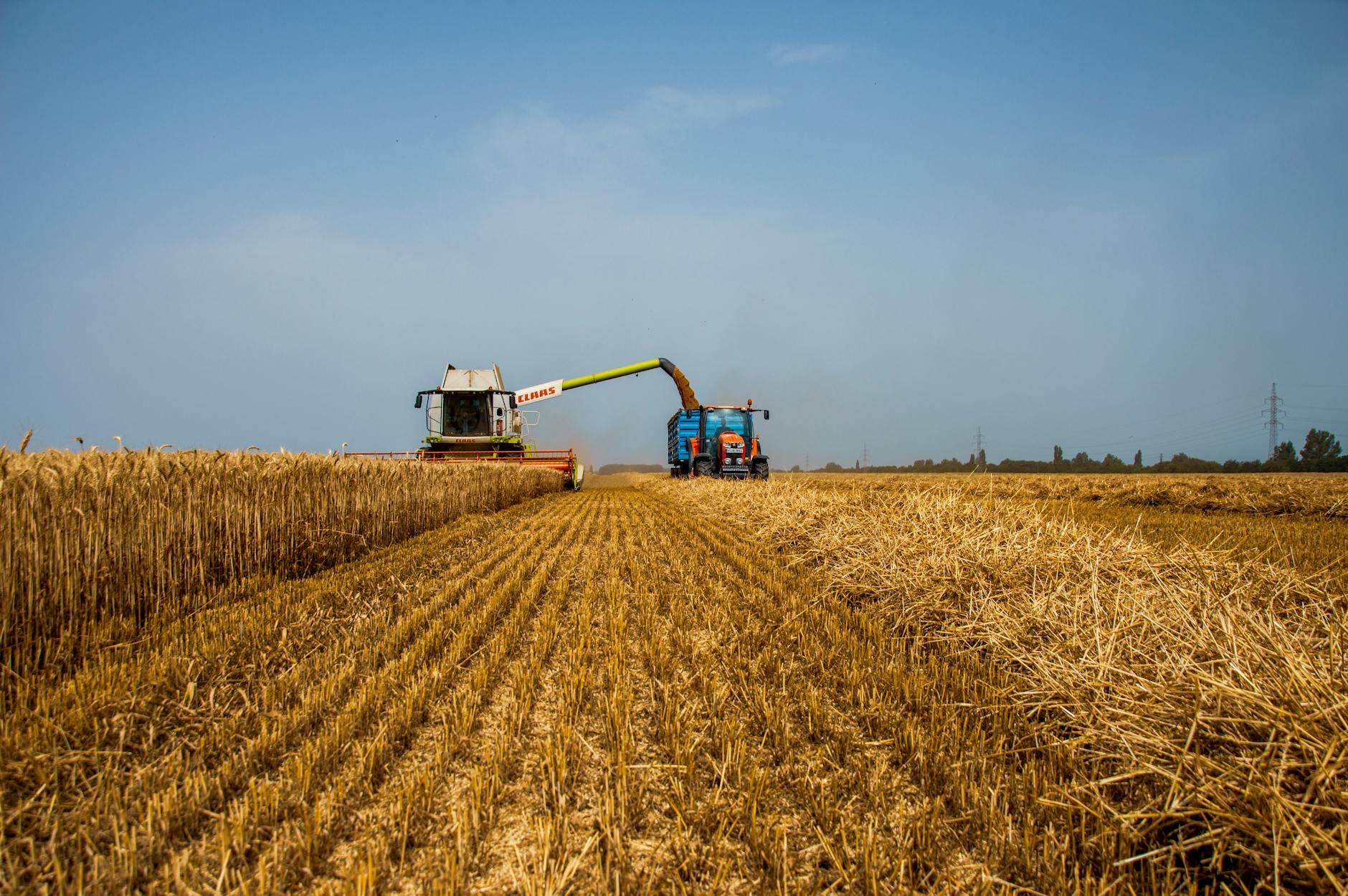
By Dmitri Volkonsky, Senior Correspondent, Actual Life Under Communism
Every spring, a fresh cohort of bright-eyed graduates rolls out of Western universities clutching degrees that took considerable imagination to name and even more imagination to monetize. They post about dismantling capitalism on their MacBooks. They share infographics about seizing the means of production between shifts at the coffee shop they're pretty sure is exploiting them.
They dream, in short, of communism.
And communism, comrades, has been listening. It has reviewed the transcripts. It has consulted with the Agricultural Resettlement Bureau. It has thoughts.
What follows is an official ranking — from merely inadvisable to agriculturally essential — of the creative and therapeutic degrees that would send a Soviet-era planning committee into paroxysms of bureaucratic joy. Not because your passion isn't valid. But because passion does not harvest itself.
10. Mindfulness-Based Art Facilitation (Minor: Jungian Symbolism)
You're actually fine. Relatively speaking. The state requires someone to paint motivational murals in tractor factories, and your colour theory fundamentals are passable. You will be assigned to the Ministry of Industrial Aesthetics, Ural Branch, where you will spend the next twelve years painting heroic wheat-threshers onto the walls of buildings that smell of diesel and quiet desperation.
It's not the turnips. Consider yourself lucky.
Official Reassignment Status: Conditionally Retained. Report to Chelyabinsk by Thursday.
9. Therapeutic Illustration: Visualising Trauma Through Comics
The committee admires the initiative. Sequential art has a proud propagandistic tradition. Unfortunately, your portfolio consists entirely of a forty-page graphic memoir about your complicated relationship with your stepfather's record collection, which the Bureau of Cultural Relevance describes as "self-indulgent" and "not featuring a single tractor." You will be retrained.
Official Reassignment Status: Transferred to Potato Processing Facility, Minsk Oblast. Your drawing hand will be preserved where possible.
8. Expressive Dance for Emotional Healing
Dear Comrade,
The Bureau has reviewed your thesis performance, Unraveling: A Somatic Journey Through Inherited Shame, with great attention. We note that it was seventy-three minutes long and featured what our analyst describes as "a lot of rolling around." While the state values physical fitness, the rolling-around sector is currently fully staffed. The sunflower harvest in Krasnodar, however, is not. You will find that bending repeatedly at the waist draws on many of the same physical principles as your practice.
Warm regards, The Committee
Official Reassignment Status: Sunflower Harvest, Krasnodar. Bring sensible shoes. Leave the interpretive scarves.
7. Narrative Therapy and Storytelling Arts
Fascinating field. You believe people can heal by reauthoring the stories they tell about themselves. The collective believes people can also heal through the dignity of honest labour and a daily cabbage allocation. These philosophies are not necessarily incompatible. You will be assigned to the State Radio Broadcasting Unit, Rural Divisions, where you will read crop yield announcements with "warmth and narrative intention" five days a week. The other two days you will be in the fields generating material.
Official Reassignment Status: Rural Broadcasting, with supplementary turnip duties. Your narrative gifts will be put to use.
6. Holistic Arts Integration: Weaving, Wellness, and Whiteness Studies
The committee paused at length over this one. The weaving component is genuinely useful — textile production remains a priority. The wellness component is puzzling but ignorable. The Whiteness Studies component caused our senior analyst, Comrade Petrov, to stare at the ceiling for approximately four minutes before writing "reassign immediately" in red ink and going home early.
Official Reassignment Status: Textile Mill, Novosibirsk. You will weave actual things. This is non-negotiable.
5. Sound Healing and Vibrational Therapy (Concentration: Tibetan Bowl Frequencies)
Comrade,
We played your capstone recording — 47 minutes of overlapping bowl resonances intended to "dissolve the ego's attachment to linear time" — at the Bureau's monthly review meeting. Three committee members fell asleep. One reported a headache. Comrade Voloshyn said it reminded him of the noise the grain elevator makes when the belt slips, which is not a compliment in the way you might hope.
The grain elevator, incidentally, needs someone familiar with repetitive droning sounds and an indifference to immediate results. Congratulations on your placement.
Official Reassignment Status: Grain Elevator Maintenance, Omsk. Your sensitivity to vibration will prove professionally relevant.
4. Community Mural Arts: Centering Marginalized Voices in Public Space
The state loves a mural. The state is, in fact, historically enthusiastic about murals. The issue is that your portfolio centres marginalized voices in ways that the Central Aesthetics Committee describes as "not sufficiently featuring the triumph of collective agriculture" and "too many feelings, not enough combines." You will attend a brief re-education seminar on approved iconography and then be deployed to paint the side of a grain storage facility in Volgograd. There is a quota. There is always a quota.
Official Reassignment Status: Approved Mural Painter, Agricultural Infrastructure Division. Reference packet of acceptable tractor models enclosed.
3. Ecotherapy: Healing Through Radical Presence in Nature
Oh, wonderful news. You already love nature. You believe in the restorative power of working with your hands in the earth, of feeling the soil, of being genuinely present with the land. The collective has been waiting for you specifically. You will be present with the land approximately ten hours a day across a rather large carrot-growing region of western Siberia. Your healing journey begins immediately.
Official Reassignment Status: Carrot Fields, Western Siberia. Your philosophy and your job description are now identical. You're welcome.
2. Decolonizing Fiber Arts: Reclaiming Textile Traditions Through an Intersectional Lens
The committee spent considerable time with this one, primarily because nobody could determine what it meant in practical terms. After consultation, the Bureau concluded that you know how to work with fiber and have a high tolerance for repetitive, ideologically-driven labour. Both qualities are prized.
Official Reassignment Status: Wool Processing Plant, Kazakhstan. The intersectional lens has been logged. It will not be relevant to your new duties.
1. Decolonizing Pottery: A Critical Theory Approach
Comrade,
We have reviewed your degree with the full attention of the Bureau, the Sub-Committee on Practical Skills Assessment, and two senior agronomists we brought in as consultants. You spent three years learning to make pots while simultaneously arguing that the act of making pots is ideologically compromised. You wrote a 12,000-word dissertation on the "colonial violence embedded in kiln technology." You cannot, according to your own academic record, make a pot that holds water.
The turnip fields of Tambov Oblast ask very little of you philosophically. They require only your presence, your back, and a willingness to suspend your critical framework for the duration of the harvest, which runs through October.
We have noted your preferred pronouns. The turnips are indifferent but we have logged them regardless.
With revolutionary solidarity, The Bureau of Human Resource Optimization
Official Reassignment Status: Tambov Turnip Collective, effective immediately. Dissertation archived. Kiln decommissioned. Good luck out there.
Dmitri Volkonsky is the Senior Correspondent for Actual Life Under Communism. He has never done a single day of interpretive dance in his life, which is why he still has all his fingers.