You Went Viral Posting About Bike Lanes. The Revolution Would Like You to Begin With the Pipes.
Somewhere in your content archive — probably around the eighteen-month mark, when the algorithm really started rewarding your particular brand of urbanism-as-personality — you posted a video that got 4.2 million views. The thumbnail was a split image: a sunlit Dutch street lined with cyclists and café seating on one side, and an American suburban arterial road choked with parking lots on the other. The caption was: "This is a policy choice, not a natural disaster."
It was a good video. The Bureau watched it eleven times, mostly because the infrastructure subcommittee kept requesting replays of the section where you explained stormwater management as a function of urban density. They found it relevant to your assignment.
You are being sent to Norilsk.
For Those Unfamiliar With Norilsk
Norilsk is a city in northern Siberia, located approximately 180 miles above the Arctic Circle, with a population of around 170,000 people and a climate that the Bureau's relocation team describes, in their official materials, as "bracing." Average January temperature: minus 22 degrees Fahrenheit. Average January wind chill: a number that the Bureau has chosen not to include in this document on the grounds that it would be counterproductive.
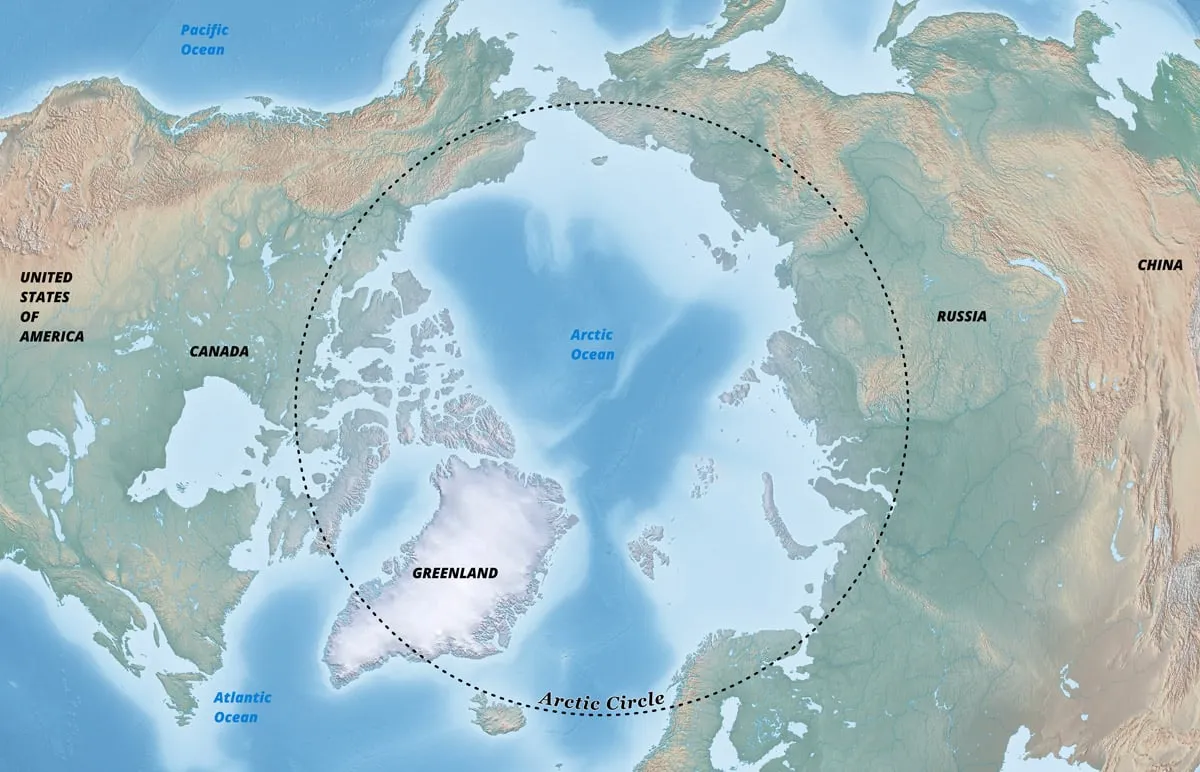 Photo: Arctic Circle, via www.geographyrealm.com
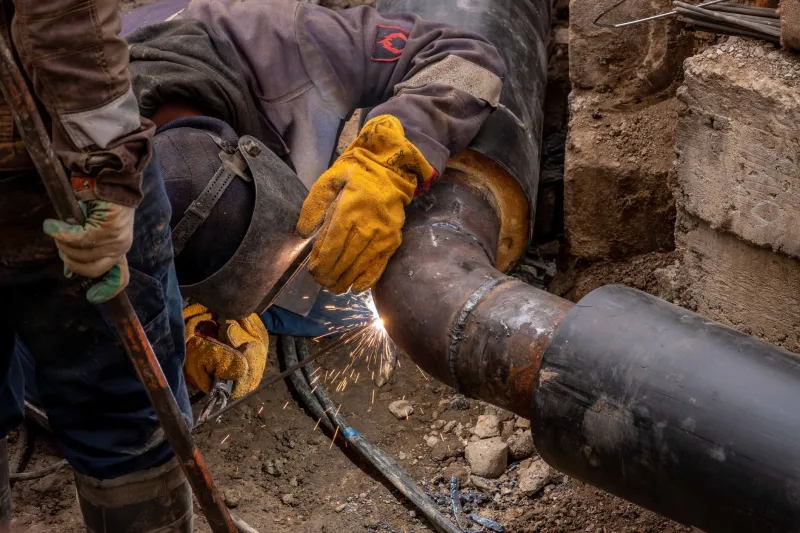
Norilsk has streets. It has, technically, a transit system. What it does not have — and this is where your expertise becomes relevant — is a functioning underground drainage and sewage infrastructure network. The existing system was installed between 1953 and 1971 and has been described by every engineer who has assessed it since 1987 as "a situation."
The Bureau has decided that someone who has spent three years explaining to nearly a million followers why urban infrastructure is a political priority and a moral responsibility should be enthusiastic about this opportunity.
You will be working with a crew of seven. You are the only one who has ever used the word "placemaking" in a professional context. The Bureau considers this a balanced team.
The Gap Between Your Vision and Your Assignment
Let us be precise about what you thought was going to happen, because precision is important in infrastructure work and it is good to start practicing now.
You thought the revolution would need urban planners. And it does. It needs them urgently, desperately, in ways that should theoretically be very exciting for someone with your level of theoretical preparation. The problem — if we can call it that, and the Bureau prefers to call it an opportunity for applied learning — is that urban planning in a functioning revolutionary society proceeds in a specific order.
Step one is not, as you perhaps imagined, convening a participatory design charrette to reimagine the streetscape of a mid-sized American city. Step one is making sure the city's underground systems do not collapse and flood the residential blocks with sewage. You cannot have the mixed-use, transit-oriented, human-scale neighborhood of your content dreams if the pipes under it are held together with what your new crew chief, Dmitri, describes as "hope and old tape."
You are on Step One. The Bureau estimates Step One will take between eighteen months and four years, depending on the permafrost situation, which is, Dmitri says, "also a situation."
A Partial List of Concepts From Your TikTok Content That Will Be Directly Relevant to Your New Role
- Combined sewer overflow events and their relationship to urban density (you covered this in your "Why Does It Flood When It Rains?" video — turns out it's about to be very personal)
- The relationship between street-level infrastructure decisions and subsurface engineering constraints (your "Why Can't We Just Add Bike Lanes?" video touched on this; the answer, in Norilsk, involves about forty feet of frozen ground)
- The long-term cost of deferred infrastructure maintenance versus proactive investment (you made this point eloquently in the context of American highway spending; Dmitri would like you to make it again, in Russian, to the municipal budget committee, at a meeting next Thursday)
- Permeable surface design and stormwater infiltration (purely theoretical in your content; now extremely literal)
The Bureau notes that you actually do know quite a lot about this subject. The issue was never your knowledge. The issue was that you assumed knowledge about urban systems would translate into a role designing them rather than a role inside them, at 3am, in January, with a headlamp and a pipe wrench, which is where most urban systems actually live.
Your Followers: A Status Update
Your 890,000 TikTok followers have been sorted by the Bureau's audience analytics team into skill-adjacent labor pools.
The 340,000 followers who engaged most heavily with your parking lot content have been assigned to a surface lot conversion project in a post-industrial district outside Chelyabinsk. They are removing asphalt. With jackhammers. It is, by their accounts, deeply satisfying for approximately the first forty minutes and then considerably less so.
The 210,000 followers who shared your "Why Doesn't the US Have Good Trains?" videos have been assigned to regional rail maintenance crews across the Ural corridor. Several of them have reported that they now understand, in a new and physical way, exactly why the US doesn't have good trains.
The 67,000 followers who engaged with your content about accessory dwelling units and missing middle housing have been assigned to a prefabricated housing construction collective in western Siberia. They are building the missing middle. With their hands. In weather.
Your comment section, which contained approximately 4.2 million comments over your content career, has been archived by the Bureau. A recurring theme in the comments was: "Someone needs to actually fix this." The Bureau agrees. That someone is you.
Dmitri's Assessment of Your First Week
The Bureau requested a performance review from your crew chief after your first five days on the drainage project. Dmitri's report, translated and lightly edited for length, reads as follows:
"He talks a lot about 'systems thinking.' I told him the system he needs to think about is the junction at sector 7-C, which has been leaking into the residential foundation since February. He made a diagram. The diagram was actually pretty good. He then asked if we could 'pilot a participatory process' for deciding which pipe to fix first. I told him the pipe that is currently filling with groundwater is the pipe we fix first. He understood this. He is learning. He does not complain about the cold as much as I expected. I would give him a 6 out of 10. He will be a 7 by spring if the permafrost cooperates."
The Bureau considers this a promising start.
What Comes After the Pipes
Here is the thing that the Bureau will tell you, because it is true and because you deserve to hear it: the work you described in your content was real work. The problems were real problems. Walkable neighborhoods, functional transit, human-scale streets — these are not frivolous concerns. They are, in fact, exactly the kind of infrastructure investments that determine whether a city is livable or miserable, and you were right to spend three years making that case to nearly a million people.
The revolution agrees with you. That is why it sent you here first, rather than to a coal seam or a fish processing plant, which, we want you to know, was on the table.
When the pipes are done — and they will be done, eventually, because Dmitri has been doing this for thirty years and he finishes what he starts — there will be planning work. Real planning work, with maps and decisions and the possibility that something you design will exist in the physical world in a way that your TikToks, however viral, never quite managed.
But first: the pipes.
The junction at sector 7-C is waiting for you. Dmitri says bring the diagram.
Welcome to the infrastructure, Comrade. It was always going to start underground.