The State Has Feelings Too: One Therapist's Journey from $280-an-Hour Sessions to Processing 300 Tractor Mechanics a Week
The State Has Feelings Too: One Therapist's Journey from $280-an-Hour Sessions to Processing 300 Tractor Mechanics a Week
A diary recovered from the Akron Emotional Wellness Processing Center, Unit 4, Formerly the Applebee's on West Market Street
Monday, Week One
They gave me a clipboard.
Not a tablet. Not access to my former practice management software, which I had customized over three years with color-coded client profiles, individualized treatment arcs, and a trauma-informed intake process I was genuinely proud of. A clipboard. With a form on it. The form has four fields: Name, Worker ID, Primary Complaint (circle one: Anxiety / Anger / Fatigue / Other), and Disposition (circle one: Functional / Needs Follow-Up / Refer to Agricultural Reassignment).
I asked Director Marsh where the 'Other' complaints get documented in any meaningful clinical depth.
He pointed to the back of the form, where there is a two-inch blank space.
Two inches.
I have a client — I'm sorry, a worker — whose relationship with his father is so foundational to his current emotional dysregulation that I spent four sessions with him in my former practice just establishing the therapeutic container before we even began to touch the material. I have two inches.
I wrote 'complex presentation' and circled 'Needs Follow-Up.'
The follow-up slot is in six weeks.
Tuesday, Week One
I saw fourteen workers today. My former caseload was eleven clients per week, each receiving a fifty-minute session in a carefully curated environment I had spent considerable time designing — the warm lighting, the weighted blanket basket, the white noise machine, the small succulent on the windowsill whose presence I had read about in three separate evidence-based interior design studies.
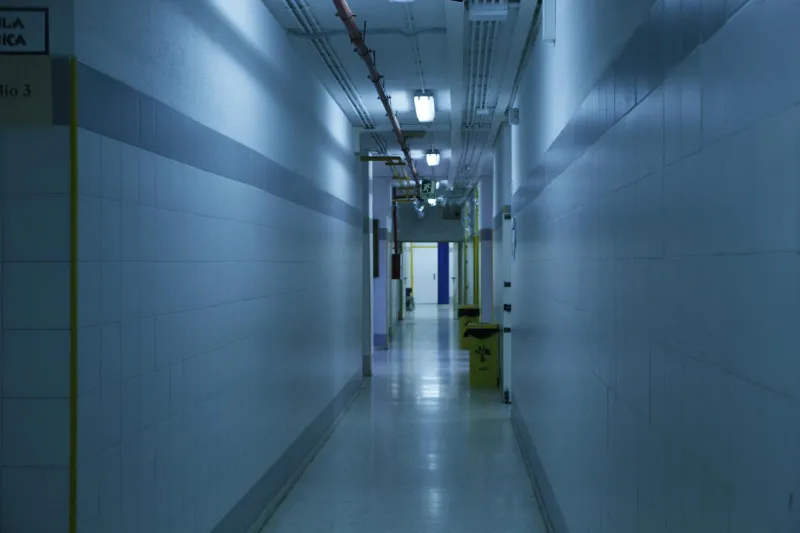
The current environment is the former Applebee's bar area. The overhead lights are fluorescent and one of them flickers. There is no white noise machine. There is ambient noise, which is the sound of the kitchen — they're still using it for collective meal prep — and the distant but persistent sound of someone moving sheet metal in the parking lot.
I asked if I could bring my small succulent from home.
Director Marsh said the succulent would need to be cleared by the Ministry of Botanical Resources.
I did not follow up on this.
Wednesday, Week One: A Note on the Historical Context I Was Not Fully Prepared For
I want to be honest here, because I think honesty is what this diary is for.
In graduate school, in my clinical theory seminars, in the six continuing education courses I completed on liberation psychology and radical therapeutic practice — at no point did any instructor spend significant time on the historical relationship between communist states and the field of psychology.
I have since done some reading.
This reading has been clarifying in the way that a cold shower is clarifying.
In the Soviet Union, psychology as a discipline was viewed with profound suspicion for much of the 20th century. The idea that an individual's inner life was a legitimate subject of professional inquiry sat uncomfortably with a worldview in which the collective's needs were definitionally prior to the individual's. Freudian analysis was banned. Practitioners who persisted were sometimes reassigned. To places.
 Photo: Soviet Union, via cdn.britannica.com
I am in Akron, Ohio, which is not a gulag, and I want to be clear that I appreciate the distinction. But I am also sitting in a former Applebee's with a clipboard and a two-inch documentation field, and I think the ideological throughline is one I should have examined more carefully before I put that 'Fully Automated Luxury Communism' sticker on my Hydro Flask.
The Hydro Flask has been nationalized. It is now used in the collective kitchen.
Thursday, Week Two: The Case of Worker #2847
I cannot use names, obviously. Worker #2847 came in for his intake with the energy of a man who had been told to go talk to someone and had decided to get it over with as quickly as possible.
He sat down. He looked at me. He said, 'I don't have feelings.'
In my former practice, I would have received this statement as an invitation. I would have leaned forward slightly — not too much, never too much — and I would have said something like, 'I'm curious about what it means for you to say that.' We would have begun to explore the function of emotional avoidance in his attachment history. We might have done some somatic awareness work. I had a grounding exercise that I developed myself and presented at a conference in Portland in 2022 that three people described as 'genuinely transformative.'
I had eleven minutes.
I said, 'Tell me about your week.'
He told me about a hydraulic seal on a John Deere 8R that had failed twice in ten days and what he thought the cause was, in considerable mechanical detail. It took nine minutes. He seemed to feel better.
I circled 'Functional' and wrote 'mechanical stress re: hydraulic systems' in the two-inch space.
I think we made progress. I'm not sure it was the kind I trained for.
Monday, Week Three: The Radical Self-Compassion Problem
I built my practice on a modality I developed called Somatic Abundance Therapy, or SAT, which integrated mindfulness-based cognitive approaches with somatic experiencing and what I described in my intake materials as 'a decolonized framework for self-worth reconstruction in high-achieving individuals.'
My clients were, to be transparent, mostly professionals in Brooklyn and the West Village who were making a great deal of money and feeling complicated about it. I charged $280 per session. I had a six-month waitlist. I felt good about the work.
I have been thinking, sitting in this Applebee's, about what 'decolonized framework for self-worth reconstruction' means to a man who spent eleven hours yesterday replacing a PTO shaft in a field in November.
I tried, gently, to introduce a brief body-scan exercise with Worker #3104 this morning. I asked him to close his eyes and notice what sensations were present in his body.
He said, 'My back hurts.'
I said, 'Can you describe that sensation without judgment?'
He looked at me for a moment and then described it, in precise anatomical terms, as a compression issue between L4 and L5 that he'd been dealing with for three years.
I referred him to the medical unit.
I circled 'Needs Follow-Up.'
This was, I think, the most useful thing I have done since I arrived.
Friday, Week Four: What I've Learned
I have now seen 112 workers. I have used the two-inch documentation space on every single form, sometimes writing in margins, sometimes in a font that my graduate advisor would describe as 'concerning.'
Here is what I have learned:
These men and women are tired in a way that has a specific texture — not the existential fatigue of my former clients, who were tired of meaning, but the direct physical tiredness of people who have been using their bodies hard in cold weather. They do not, by and large, want to process their childhood attachment patterns. They want to be heard for approximately twelve minutes, told that their frustration is reasonable, and sent back to work feeling slightly less like they are invisible.
This is, I realize, a form of therapy. It is not the form I trained for. It is not reimbursed at $280 per session. It is reimbursed at a flat collective wage that I have been asked not to discuss, but which I can describe as 'clarifying.'
I still think about my succulent.
I still think about my Portland conference presentation.
I think, more than I expected to, about Worker #2847, who came back last week not because he was scheduled but because, he said, he had something he wanted to say.
He talked for sixteen minutes. I went over my allotted time. Director Marsh knocked on the partition.
Worker #2847 said he hadn't talked to anyone like this since his brother died four years ago.
I did not have a weighted blanket to offer him. I did not have warm lighting or a white noise machine or a carefully curated therapeutic container.
I had a clipboard, a flickering fluorescent light, and the distant sound of sheet metal.
It was, I think, the most useful session I have conducted in eight years of practice.
I am not sure what to do with that information.
I have two inches to write it down.
Dr. Zoe Whitfield-Park is State Emotional Wellness Processor #4471, currently serving the Consolidated Tractor Maintenance Division, Akron District. Her private practice website, somaticabundancetherapy.com, now redirects to the Ministry of Labor's agricultural yield reporting portal. Her Substack has been repurposed as a quarterly mental health statistics bulletin. She misses her succulent.
The Ministry of Collective Wellbeing notes that Processor #4471's performance reviews have been satisfactory. Her two-inch documentation margins have been formally cited as 'creative use of available resources.' This is considered a commendation.