Comrade, We Need to Talk About Your 'Skill Set': A Grief Counsellor's Guide to Discovering the Revolution Has No Use for Your Podcast

Comrade, We Need to Talk About Your 'Skill Set': A Grief Counsellor's Guide to Discovering the Revolution Has No Use for Your Podcast
By Dmitri Volkonsky, Senior Correspondent, Actual Life Under Communism
So. The revolution came. You were ready. You had your tote bag, your reading list, your deeply considered opinions about Kropotkin, and a SoundCloud full of drone ambient pieces you composed during lockdown using nothing but a singing bowl and a repurposed radiator. You were, in your own estimation, exactly the kind of creative thinker a new society would need.
And then the Labor Allocation Committee looked at your intake form, noted your listed competencies — 'intuitive movement facilitator,' 'somatic narrative guide,' 'community zine co-curator' — and assigned you to the drainage ditch outside Sector 7.
This is normal. This is, in fact, historically consistent. And with the right support, you will get through it.
What follows is a guide. Not a comfortable one. But a necessary one.
Stage One: Denial ('They Obviously Haven't Seen My Portfolio')
The first response is always the same: a calm, certain belief that there has been a clerical error. You explain, patiently, that you are not the kind of person who digs drainage ditches. You are the kind of person who facilitates dialogue about drainage ditches. You ask to speak with someone senior. You use the phrase 'my particular skill set' four times in under three minutes.
This is denial, and it is completely understandable.
It is also, historically speaking, not a new problem. When the Soviet Union launched its first Five-Year Plan in 1928, the state didn't sit around waiting for citizens to self-identify as 'passionate about infrastructure.' It conducted labour censuses, assessed what the economy actually required, and directed bodies accordingly. What the economy required, almost without exception, was coal miners, collective farm workers, and construction labourers. What it did not require was a one-woman show about intergenerational grief.
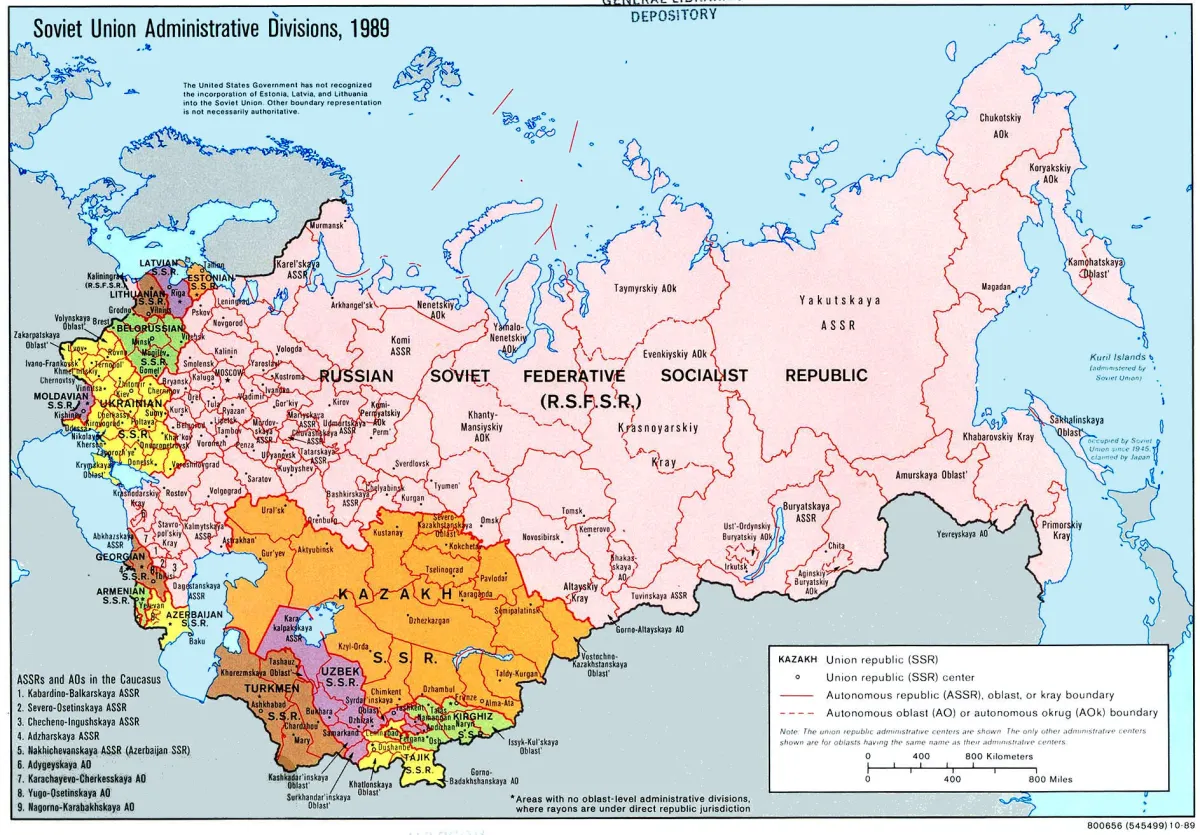 Photo: Soviet Union, via www.globalsecurity.org
Your portfolio has been seen. The committee thanks you for your submission.
Stage Two: Anger ('This Is Literally What Capitalism Does')
Once denial cracks, fury floods in. You argue — loudly, in the mess hall, to increasingly uncomfortable fellow travellers — that being assigned to a job you didn't choose is indistinguishable from the very system you were trying to dismantle. You use the word 'coercive' eleven times. Someone gently points out that you ate a full bowl of borscht this morning and perhaps the system is not entirely without merit. You do not receive this well.
The anger is valid. Sit with it. Then consider: Mao Zedong's government, during the Great Leap Forward, sent millions of educated urban citizens — teachers, artists, intellectuals — to the countryside for 'productive re-education.' This was called, with characteristic revolutionary optimism, xiafang: 'sending down.' The stated goal was ideological purification. The actual goal was that someone had to harvest the grain, and the grain did not care about your thesis on Situationist theory.
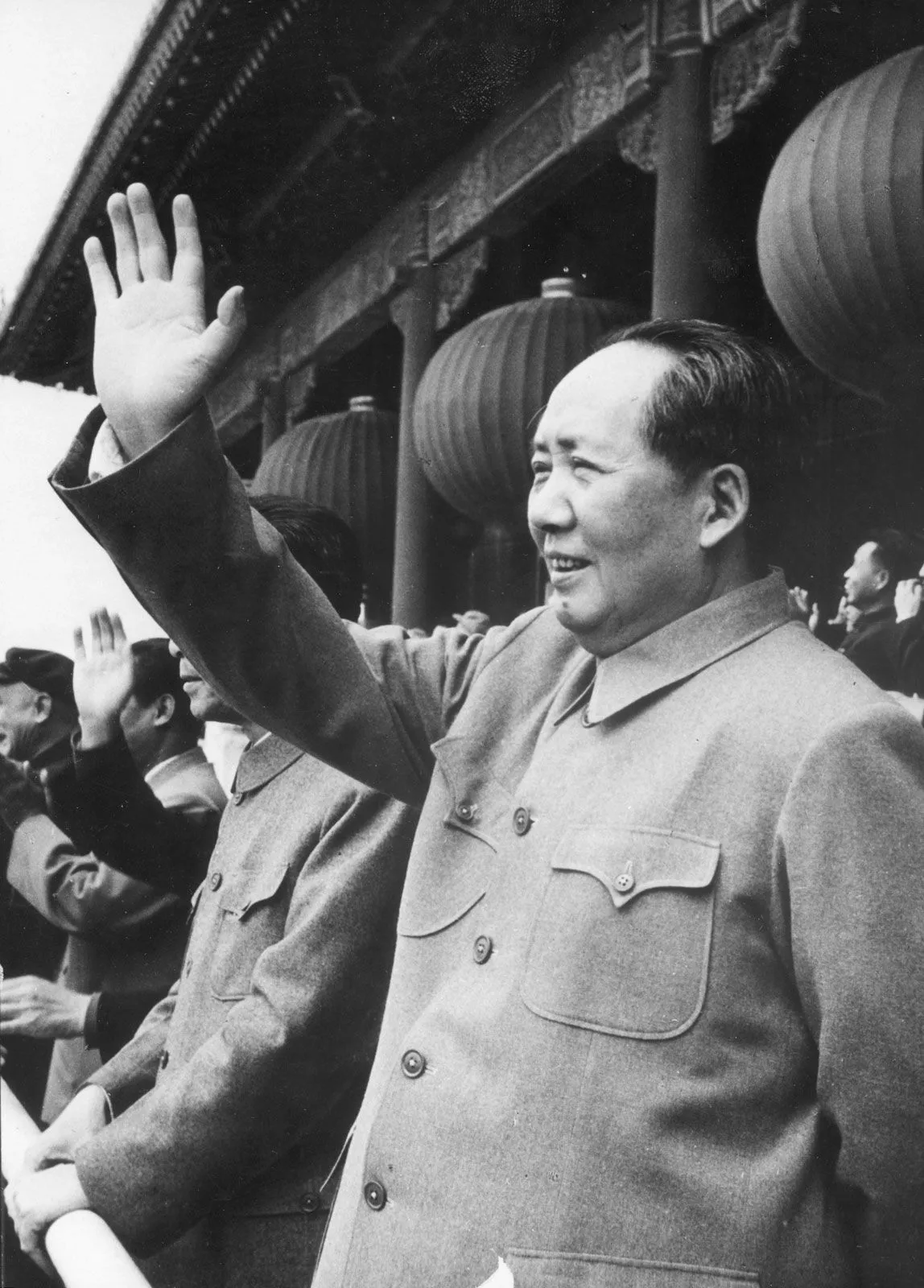 Photo: Mao Zedong, via cdn.britannica.com
You are not being oppressed. You are being allocated. There is a difference. The committee would like you to remember this while digging.
Stage Three: Bargaining ('What If I Taught Art to the Ditch Diggers?')
This is the creative stage, and honestly, it is where your talents finally surface. You propose, in rapid succession: an artist residency embedded within the drainage programme; a podcast documenting the 'lived experience of infrastructure workers'; a therapeutic circle for people processing their relationship to manual labour; a mural on the side of the latrine block depicting the dialectical movement of history.
The committee listens. The committee is unmoved. The committee has heard variations of this proposal fourteen times this week.
Here is the thing about bargaining with a planned economy: it is a poor negotiator, because it does not need to negotiate. The Soviet nomenklatura didn't accept counteroffers. The Cuban state didn't respond to 'but what if I did something adjacent to the sugarcane harvesting.' The plan was the plan. The quota was the quota. And the quota, friend, was not expressed in units of 'vibes facilitated.'
Stage Four: Depression ('I Went to Art School for This')
The bargaining fails. The shovel arrives. And somewhere between the second and third hour of your first shift, a profound sadness descends.
You think about your undergraduate thesis. You think about the panel discussion you were invited to at that festival in Bristol. You think about the Instagram caption you wrote last year — 'imagining new worlds' — over a photograph of yourself reading The Communist Manifesto in a hammock.
Nobody is going to photograph you right now. You are ankle-deep in something that requires no caption.
Let yourself grieve. Genuinely. Because the gap between the revolution as aesthetic and the revolution as practice is one of the great, yawning chasms of modern political life, and you are not the first person to fall into it. Cuba's literacy campaign in 1961 was genuinely remarkable — but it was driven by tens of thousands of young people going, physically, into remote rural areas to do unglamorous, exhausting, necessary work. The revolution, at every point in history, has been built by people doing things they found difficult, not things they found expressive.
The depression, in other words, is appropriate. It means you are finally understanding something true.
Stage Five: Acceptance ('Fine. Where's the Other Shovel?')
Acceptance does not arrive as a sunrise. It arrives as a quiet, slightly defeated pragmatism — the moment you stop explaining yourself to the committee and simply pick up the tool that is waiting for you.
This is not defeat. This is, arguably, the first genuinely political act you have performed.
There is a reason that every successful revolutionary movement in history — from the Cuban campesinos to the Vietnamese resistance to the early Israeli kibbutz collectives — built itself on people who were willing to do the work that needed doing, rather than the work they had envisioned doing. The collective does not run on self-actualisation. It runs on turnips, and drainage, and people who show up.
You will learn things in the ditch that you could not have learned in the residency. You will understand, in your body rather than your bibliography, what it means to build something from the ground up — literally, from the ground, upward.
A Final Word from the Committee
The revolution has, at any given moment in history, required approximately forty ditch diggers for every one person who is 'really good at holding space.' It has needed bricklayers, farmers, sanitation workers, and people willing to do the fourth shift when everyone else is exhausted. It has needed, above all, the humility to accept that collective survival is not organised around individual fulfilment.
Your ambient soundscape compositions will still be there when the drainage system is complete.
The drainage system, however, cannot wait for your process.
Report to Sector 7 at 0600. Bring water. The committee wishes you well.
Dmitri Volkonsky is a Senior Correspondent at Actual Life Under Communism. He has been assigned to the editorial ditch, which he is learning to appreciate.